Complete your stack
- MK-677 - Ibutamoren Original price was: $109.99.$84.99Current price is: $84.99.
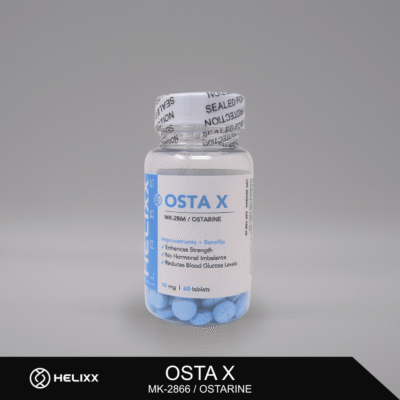
- MK2866 - Ostarine Original price was: $99.99.$79.99Current price is: $79.99.
- RAD 140 – Testolone Original price was: $109.99.$84.99Current price is: $84.99.
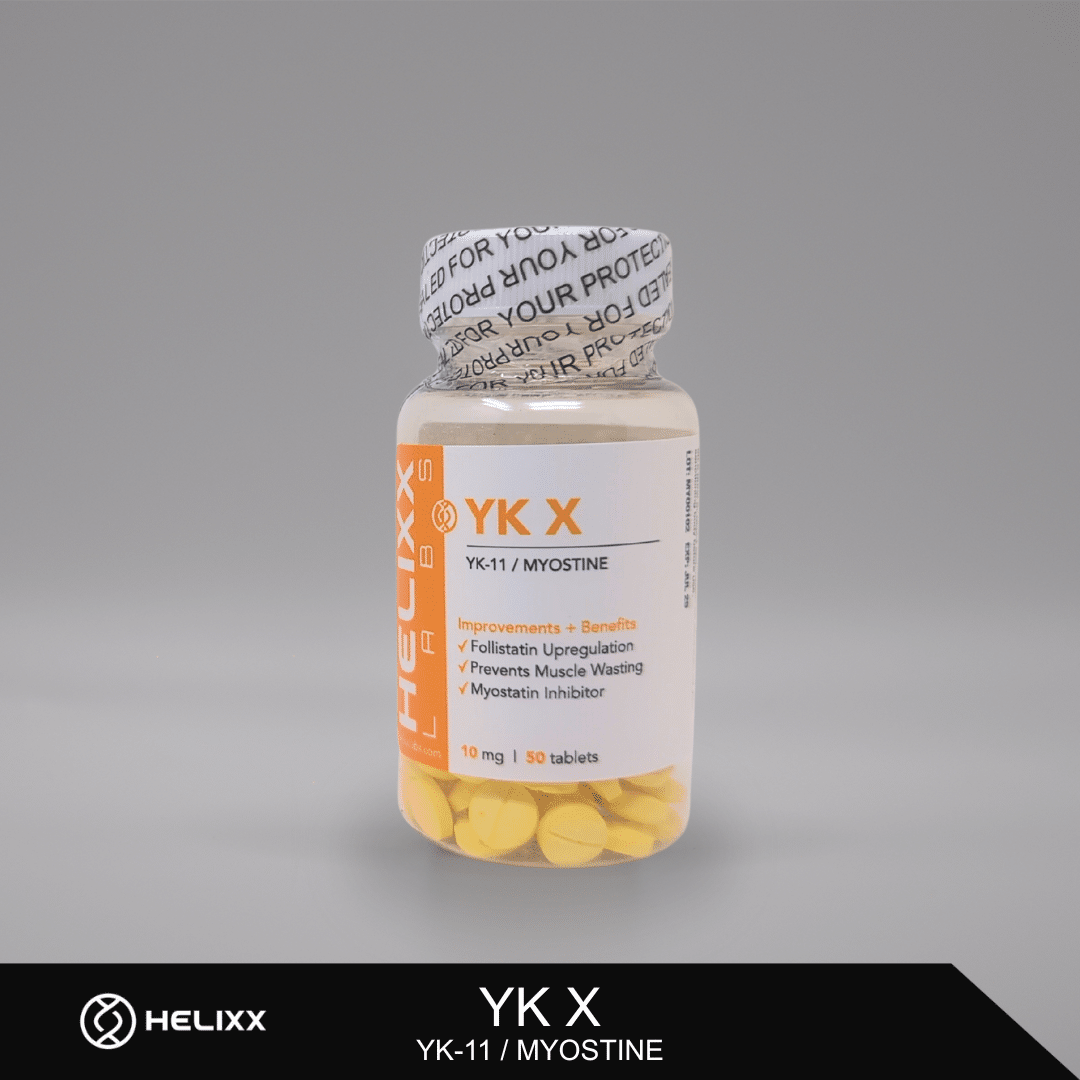
YK11 – Myostine
Original price was: $109.99.$84.99Current price is: $84.99.
YK11 – Myostine is a steroidal SARM and functional myostatin inhibitor that up-regulates follistatin to drive muscle-cell differentiation more potently than DHT in laboratory models. Premium research-grade YK11, supplied in Canada for laboratory and educational use only, not for human consumption.
Description
YK11 – Myostine is one of the most talked-about compounds in the Canadian SARMs space for a reason: this steroidal selective androgen receptor modulator is a functional myostatin inhibitor, engineered to drive myogenic differentiation more powerfully than DHT in laboratory models by switching on follistatin, the body’s own brake-release on muscle growth.1 If your research program demands a high-interest anabolic reference standard, YK11 – Myostine Canada delivers a uniquely potent, well-characterized mechanism for study. It ships strictly for laboratory and educational use only, never for human consumption.
What Is YK11 – Myostine?
YK11 (research name “Myostine”) is a synthetic, steroidal compound built on a testosterone/DHT-like backbone with a distinctive 17-alpha structure. Although it is routinely grouped with SARMs Canada suppliers list alongside compounds like LGD-4033 – Ligandrol and RAD 140 – Testolone, YK11 is mechanistically distinct: it behaves as a partial-agonist selective androgen receptor modulator and, most notably, as an indirect functional myostatin inhibitor. Because there are no human clinical trials of YK11, every claim about its activity rests on preclinical cell-culture and rodent research. It is sold here purely as a research chemical and reference material for laboratory investigation, not as a supplement, drug, or product for human or veterinary use.
How YK11 Works
YK11 binds and activates the androgen receptor (AR), but it does so in a “gene-selective” way: it does not fully induce the N-terminal/C-terminal (NTD/AF1–LBD/AF2) interaction required for complete AR transactivation, which is what distinguishes it from conventional anabolic androgens. Its signature effect is achieved indirectly. In C2C12 myoblasts, YK11 up-regulates follistatin (an endogenous antagonist of myostatin), and this follistatin surge drives myogenic differentiation via induction of the myogenic regulatory factors MyoD, Myf5 and myogenin, more strongly than DHT.1 An anti-follistatin antibody reverses the effect, which confirms that follistatin is central to YK11’s action.1 Through the same AR-dependent pathway, YK11 has also been shown to promote osteoblast proliferation and mineralization.2 Because AR antagonists attenuate these responses, the compound’s activity is understood to be androgen-receptor dependent.
What the Research Shows
- Follistatin-driven myogenesis. In C2C12 myoblasts, YK11 induced myogenic differentiation more potently than DHT by up-regulating follistatin; an anti-follistatin antibody reversed the effect, establishing a follistatin-mediated, myostatin-inhibitor-like anabolic mechanism operating through the androgen receptor.1
- Osteogenic / bone activity. In MC3T3-E1 cells, YK11 (like DHT) accelerated osteoblast proliferation and mineralization and increased osteoprotegerin and osteocalcin; an androgen receptor antagonist blocked these effects, indicating AR-dependent anabolic bone activity.2
- Neurochemical caution flag. In rats, YK11 increased hippocampal oxidative stress, impaired the endogenous antioxidant system, and caused mitochondrial dysfunction and proteotoxicity; exercise did not fully reverse these impairments, flagging a potential neurological risk.3
Researchers comparing anabolic SARM reference standards often study YK11 alongside MK2866 – Ostarine and the growth-hormone secretagogue MK-677 – Ibutamoren to contrast receptor-selective and myostatin-linked mechanisms.
Chemical Properties
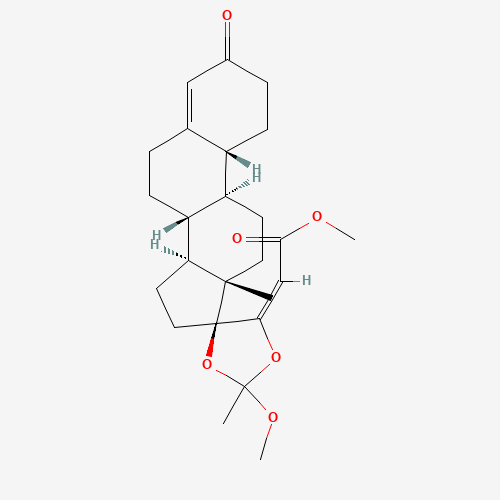
| Research Name | YK11 (Myostine) |
| CAS Number | 1370003-76-1 |
| Molecular Formula | C25H34O6 |
| Molecular Weight | 430.54 g/mol |
| Classification | Synthetic steroidal selective androgen receptor modulator (SARM) / functional myostatin inhibitor |
Research Protocols & Handling
YK11 – Myostine is provided exclusively as a research chemical for in-vitro and preclinical laboratory investigation and educational reference. It is not for human consumption and not for veterinary use. Handle it only in an appropriate laboratory setting using standard personal protective equipment. As a general guideline for steroidal research compounds, store the sealed material in a cool, dry, dark place; where a solution is required, many laboratories reconstitute or dissolve YK11 in a suitable organic vehicle (such as DMSO or ethanol) rather than water, aliquot to minimise freeze–thaw cycles, and store working solutions frozen and protected from light. Always confirm handling, solubility and stability parameters against your own institution’s protocols and the accompanying certificate of analysis.
Potential Side Effects & Safety
We would rather be straight with you than sell hype. YK11 has never been evaluated in a human clinical trial, so its human safety profile, effective dose and long-term risks are genuinely unestablished. Every piece of existing data comes from cell and animal studies. The following concerns are drawn from that preclinical evidence and from documented SARM class effects, and they are exactly why this compound is restricted to laboratory research.
- Unknown human safety. No human clinical trials exist; effective dose, safe exposure and long-term consequences in humans are unknown, and any extrapolation from rodent or cell data is speculative.
- Testosterone / HPTA suppression. As an androgen receptor agonist, YK11 is expected to suppress the hypothalamic-pituitary-testicular axis, a documented SARM class effect associated with reduced endogenous testosterone, testicular atrophy and reduced libido.
- Hepatotoxicity. SARMs as a class are linked (per NIH LiverTox) to cholestatic drug-induced liver injury, and YK11’s 17-alpha steroidal structure heightens this concern.
- Cardiovascular / lipid changes. SARMs typically lower HDL cholesterol and may adversely affect cardiovascular risk markers.
- Neurological risk. Preclinical data show hippocampal oxidative stress and mitochondrial dysfunction, incompletely reversed by exercise.3
- Androgenic effects. Potential acne, oily skin, accelerated hair loss / male-pattern baldness, and aggression or mood changes are plausible given AR agonism.
- Anecdotal complaints. Users have anecdotally reported tendon, joint and muscle-cramp issues; these are not clinically verified.
- Prohibited in sport & unapproved. YK11 is prohibited by WADA and is not approved for human consumption by any regulator; it is sold strictly as a research chemical.
Not approved for human consumption in Canada or elsewhere; research and educational use only.
Frequently Asked Questions
Is YK11 legal in Canada?
YK11 is not approved by Health Canada as a drug, supplement or food, and it is not authorized for human consumption. It can, however, be supplied and possessed as a research chemical for laboratory and educational use only. When you buy YK11 – Myostine Canada from Helixx, you are purchasing a research material, not a therapeutic product, and it must be handled accordingly.
What makes YK11 different from other Canadian SARMs?
Unlike receptor-selective SARMs such as LGD-4033 – Ligandrol, YK11 is a steroidal compound whose defining feature is functional myostatin inhibition through follistatin up-regulation, driving myogenic differentiation more potently than DHT in cell models.1 That indirect, follistatin-mediated mechanism is what sets it apart within the SARMs Canada category.
Does YK11 really inhibit myostatin?
Functionally, yes, but indirectly. YK11 does not bind myostatin itself; instead it up-regulates follistatin, an endogenous myostatin antagonist, and anti-follistatin antibody reverses its pro-differentiation effect, confirming follistatin as the central driver.1 This is a laboratory finding in cell culture, not a demonstrated human outcome.
Is YK11 safe to take?
No. There is no human safety data, and preclinical evidence points to real risks including expected testosterone suppression, potential hepatotoxicity from its 17-alpha steroidal structure, unfavourable lipid changes, and hippocampal oxidative stress and mitochondrial dysfunction in rodents.3 It is sold for research and educational use only and must never be consumed by humans.
References
Peer-reviewed and authoritative sources cited above. Helixx supplies research materials for laboratory and educational use only; citations are provided for independent verification, not as medical guidance.
- Kanno Y, Ota R, Someya K, Kusakabe T, Kato K, Inouye Y. Selective androgen receptor modulator, YK11, regulates myogenic differentiation of C2C12 myoblasts by follistatin expression. Biol Pharm Bull. 2013;36(9):1460-5. PMID: 23995658.
- Yatsu T, Kusakabe T, Kato K, Inouye Y, Nemoto K, Kanno Y. Selective Androgen Receptor Modulator, YK11, Up-Regulates Osteoblastic Proliferation and Differentiation in MC3T3-E1 Cells. Biol Pharm Bull. 2018;41(3):394-398. PMID: 29491216.
- Dahleh MMM, Bortolotto VC, Guerra GP, Boeira SP, Prigol M. YK11 induces oxidative stress and mitochondrial dysfunction in hippocampus: The interplay between a selective androgen receptor modulator (SARM) and exercise. J Steroid Biochem Mol Biol. 2023;233:106375. PMID: 37468001.
Complete Your Stack
Frequently bought together, add all and save.