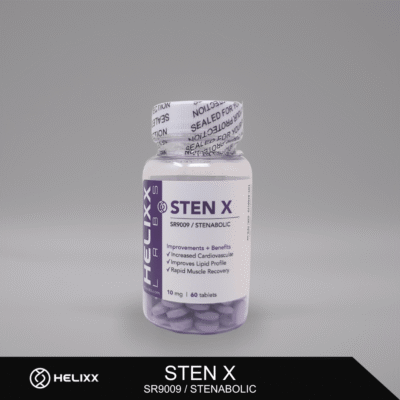
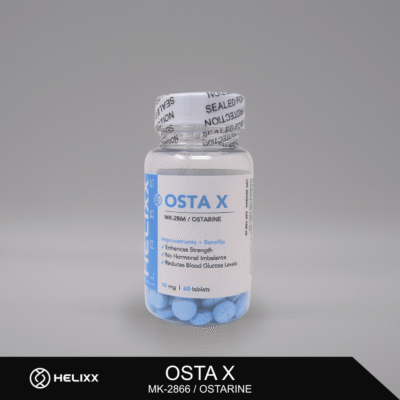
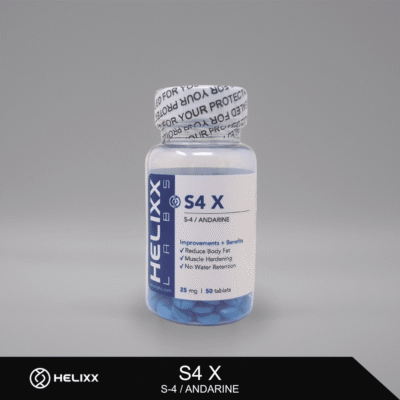
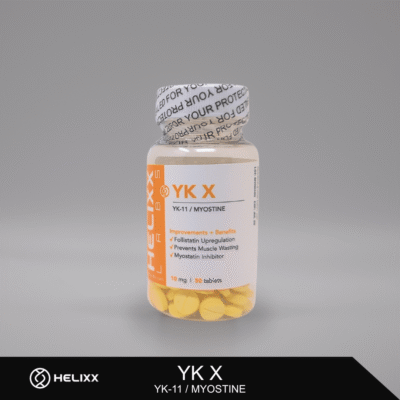
Complete your stack
- GLO (TB-500 + BPC-157 + Copper GHk Peptide Blend) $109.99
- Tirzepatide $109.99 Coming soon
- YK11 - Myostine $109.99
PT-141
$99.99
PT-141 (Bremelanotide) is a centrally acting melanocortin (MC4R) research peptide that targets the brain’s desire circuitry, not the plumbing. High-purity Canadian peptides for laboratory and educational use only.
Description
PT-141 is the research peptide that rewrote the arousal playbook. It is a centrally acting melanocortin agonist that works on the brain’s desire circuitry rather than the plumbing, and the only compound of its class to clear a full pivotal Phase 3 program before reaching the clinic.1 For laboratories sourcing high-purity Canadian peptides, Helixx supplies PT-141 Canada-wide for laboratory and educational use only.
What Is PT-141?
PT-141, known by its research name bremelanotide, is a synthetic cyclic heptapeptide analog of alpha-melanocyte-stimulating hormone (alpha-MSH), derived structurally from the earlier compound melanotan II. It behaves as a non-selective melanocortin receptor agonist, but its sexually relevant signalling is mediated centrally through the melanocortin-4 receptor (MC4R), with lesser activity at MC3R. That puts it in a distinct category from PDE5 inhibitors such as sildenafil: rather than acting peripherally to promote vasodilation, PT-141 operates upstream, within the central nervous system. It is FDA-approved in the United States as Vyleesi (1.75 mg subcutaneous, on-demand) for acquired, generalized hypoactive sexual desire disorder (HSDD) in premenopausal women, and it was investigated earlier, in both intranasal and subcutaneous forms, for erectile dysfunction. It remains a widely studied subject among Canadian peptides researchers examining central mechanisms of motivation and arousal.
How PT Works
PT-141 activates MC4R in the hypothalamus, particularly within the medial preoptic area (mPOA) and the paraventricular nucleus (PVN). Receptor binding triggers cAMP/PKA signalling that raises neuronal excitability and drives downstream dopamine release in mesolimbic and preoptic circuits governing sexual desire. This is an excitatory, top-down mechanism (fundamentally different from peripheral vasoactive agents) in which the melanocortin system stimulates dopamine to enhance desire at its source.3 Mechanistic animal work has localized this pro-sexual effect precisely: MC4R signalling in Sim1-expressing hypothalamic neurons is sufficient to restore normal sexual receptivity (lordosis) in female mice, and that circuit is dissociable from the melanocortin system’s metabolic role in appetite and body-weight regulation.4
What the Research Shows
- HSDD (RECONNECT Phase 3). Two identical 24-week, randomized, double-blind, placebo-controlled trials in roughly 1,247–1,267 premenopausal women with acquired, generalized HSDD found that subcutaneous bremelanotide 1.75 mg significantly increased sexual desire and reduced desire-related distress versus placebo (P<.001).1
- Erectile response (intranasal). In healthy men and men with mild-to-moderate ED, intranasal PT-141 produced a statistically significant, dose-related erectogenic (RigiScan) response versus placebo at doses above 7 mg, with first erection onset around 30 minutes and no clinically significant changes in vital signs, labs, ECGs, or physical exam.2
- Central, not peripheral. Review-level synthesis confirms that bremelanotide’s action at hypothalamic MC4R stimulates dopamine release to enhance desire, an excitatory central mechanism distinct from vasoactive drugs.3
Researchers comparing central signalling peptides frequently benchmark PT-141 alongside neuroactive compounds such as Selank and Semax, and stock it beside regenerative research staples like BPC-157 and GLO (TB-500 + BPC-157 + Copper GHK Peptide Blend) within a broader peptides Canada catalogue.
Chemical Properties

| Research Name | PT-141 (Bremelanotide) |
| CAS Number | 189691-06-3 |
| Molecular Formula | C50H68N14O10 |
| Molecular Weight | 1025.2 g/mol |
| Classification | Synthetic cyclic heptapeptide; non-selective melanocortin receptor agonist (central MC4R activity) |
Research Protocols & Handling
PT-141 is supplied strictly as a research material for in-vitro laboratory and educational use only. It is not for human consumption, and not for veterinary use. Lyophilized peptide should be stored cold, protected from light, and kept sealed until use; long-term storage is best at -20°C. For laboratory handling, the powder is typically reconstituted with bacteriostatic or sterile water and, once in solution, kept refrigerated and used within a limited window to preserve peptide integrity. As a research reference, PubChem catalogues this compound under CID 9941379. Always follow institutional protocols for handling, labelling, and disposal of research chemicals.
Potential Side Effects & Safety
Any serious research framing has to account for the documented adverse effects. In controlled human trials, PT-141 produced a consistent and clinically meaningful side-effect profile:
- Nausea. Very common: reported at rates that can exceed 40%, and the single leading cause of discontinuation in trials. It was among the most common treatment-emergent adverse events in the Phase 3 program.1
- Flushing. Very common, and one of the most frequently reported events across both HSDD and ED studies.2
- Headache. Very common, generally mild-to-moderate in severity.1
- Injection-site reactions. Associated with subcutaneous administration.
- Cardiovascular effects. A transient increase in blood pressure and decrease in heart rate follows each dose; the compound is contraindicated in uncontrolled hypertension or known cardiovascular disease.
- Focal hyperpigmentation. Darkening of skin, face, gums, and breasts (an MC1R-mediated effect), more likely with frequent or repeated dosing.
- Other. Vomiting, dizziness, and fatigue; with the historical intranasal formulation, cough and nasal irritation were also observed. Discontinuation for adverse events ran around 18% on drug versus 2% on placebo.1
Not approved for human consumption in Canada or elsewhere; research and educational use only.
Frequently Asked Questions
Is PT legal in Canada?
PT-141 (bremelanotide) is not approved by Health Canada as a consumer or medical product, and it is not sold for human consumption. It is available in Canada only as a research chemical for laboratory and educational use. Helixx supplies PT-141 Canada-wide strictly on that basis.
How is PT-141 different from PDE5 inhibitors like sildenafil?
They act in entirely different places. PDE5 inhibitors work peripherally to promote vasodilation, whereas PT-141 acts centrally, activating hypothalamic MC4R to stimulate dopamine release and enhance desire at the level of the brain.3
Does PT-141 affect appetite or body weight like other melanocortin compounds?
Animal research indicates the pro-sexual MC4R circuit is dissociable from the melanocortin system’s metabolic role: MC4R signalling in Sim1 neurons restored sexual receptivity in mice independently of appetite and body-weight pathways.4
What is the most common issue seen in studies?
Nausea, by a clear margin. It was very common (rates that can exceed 40%) and the leading reason participants discontinued in trials, followed by flushing and headache. Researchers frequently catalogue PT-141 alongside other Canadian peptides such as CJC-1295 and Ipamorelin for comparative study.
References
Peer-reviewed and authoritative sources cited above. Helixx supplies research materials for laboratory and educational use only; citations are provided for independent verification, not as medical guidance.
- Kingsberg SA, et al. Bremelanotide for the Treatment of Hypoactive Sexual Desire Disorder: Two Randomized Phase 3 Trials. Obstet Gynecol. 2019;134(5):899-908. PMID: 31599840.
- Diamond LE, et al. Double-blind, placebo-controlled evaluation of the safety, pharmacokinetic properties and pharmacodynamic effects of intranasal PT-141, a melanocortin receptor agonist, in healthy males and patients with mild-to-moderate erectile dysfunction. Int J Impot Res. 2004;16(1):51-59. PMID: 14963471.
- Pfaus JG, Sadiq A, Spana C, Clayton AH. The neurobiology of bremelanotide for the treatment of hypoactive sexual desire disorder in premenopausal women. CNS Spectr. 2022;27(3):281-289. PMID: 33455598.
- Semple EA, et al. Melanocortin 4 receptor signaling in Sim1 neurons permits sexual receptivity in female mice. Front Endocrinol (Lausanne). 2023;14:983670. PMID: 37033219.