

Complete your stack
- GLO (TB-500 + BPC-157 + Copper GHk Peptide Blend) $109.99
- Tirzepatide $109.99 Coming soon
- YK11 - Myostine $109.99
Ozempic (Semaglutide)
$109.99
Ozempic (Semaglutide) is the reference GLP-1 receptor agonist for metabolic research, a once-weekly peptide, studied for glycemic control, appetite regulation and dramatic body-weight change. Premium Canadian peptides, third-party verified, for laboratory and educational use only.
Description
When laboratories talk about the peptide that redefined metabolic research, they mean Ozempic (Semaglutide). It is the long-acting GLP-1 receptor agonist that produced a mean body-weight change of nearly 15% in landmark clinical work and set the benchmark every newer compound is measured against.1 Helixx supplies Ozempic (Semaglutide) Canada as a research-grade, third-party-verified peptide, giving Canadian investigators dependable access to one of the most rigorously studied molecules in modern metabolic science, strictly for laboratory and educational use.
What Is Ozempic (Semaglutide)?
Semaglutide is a synthetic analogue of native human glucagon-like peptide-1 (GLP-1), engineered for exceptional stability and a circulating half-life of roughly one week. Two structural modifications set it apart: a 2-aminoisobutyric acid substitution at position 8 that resists breakdown by the DPP-4 enzyme, and a C18 fatty di-acid chain that binds albumin to prolong its action. Marketed under the brand name Ozempic for glycemic research contexts, semaglutide has become one of the most intensively investigated peptides in the world, studied for glucose regulation, appetite control, body-weight change and cardiometabolic outcomes. As part of the Helixx catalogue of peptides Canada researchers rely on, it sits alongside next-generation agonists such as Tirzepatide and Retatrutide for comparative laboratory work.
How Ozempic Works
Semaglutide binds and activates the GLP-1 receptor, reproducing and extending the signalling of the body’s own incretin hormone.5 Through this single receptor it drives three complementary effects. It stimulates glucose-dependent insulin secretion from pancreatic beta-cells while suppressing glucagon, lowering blood glucose with a low intrinsic risk of hypoglycemia; it slows gastric emptying so that nutrients are absorbed more gradually; and it acts on hypothalamic and hindbrain satiety centres to reduce hunger and energy intake.5 Together these mechanisms underpin the weight loss and improved glycemic control observed in research, while downstream effects on blood pressure, lipids and inflammation are thought to contribute to the cardiovascular benefits seen in high-risk populations.
What the Research Shows
- Body-weight change (STEP 1). In 1,961 adults with overweight or obesity, once-weekly subcutaneous semaglutide 2.4 mg plus lifestyle intervention produced a mean body-weight change of -14.9% at 68 weeks, versus -2.4% for placebo; nausea and diarrhea were the most common adverse events.1
- Cardiovascular outcomes (SUSTAIN-6). In 3,297 patients with type 2 diabetes at high cardiovascular risk, semaglutide reduced the composite of cardiovascular death, nonfatal MI or nonfatal stroke (6.6% vs 8.9% with placebo; HR 0.74), though rates of retinopathy complications were significantly higher.2
- Cardiovascular risk without diabetes (SELECT). In 17,604 adults with pre-existing cardiovascular disease and overweight or obesity but no diabetes, semaglutide 2.4 mg weekly reduced major adverse cardiovascular events by roughly 20% versus placebo over a mean of 40 months.3
Because of this breadth of data, semaglutide is frequently the reference point in comparative studies against dual and triple agonists like Tirzepatide and Retatrutide, and against metabolic small molecules such as 5-Amino-1MQ and AOD9604.
Chemical Properties
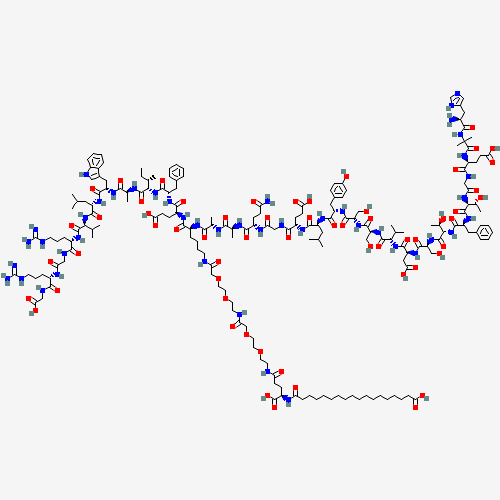
| Research Name | Ozempic (Semaglutide) |
| CAS Number | 910463-68-2 |
| Molecular Formula | C187H291N45O59 |
| Molecular Weight | 4113.58 g/mol |
| Classification | Long-acting GLP-1 receptor agonist (peptide analogue) |
Research Protocols & Handling
Ozempic (Semaglutide) is supplied strictly as a research material for in-vitro and laboratory investigation; it is not for human consumption and not for veterinary use. Lyophilized peptide should be stored sealed, protected from light, at -20 °C for long-term stability. For reconstitution, most protocols add bacteriostatic or sterile water gently down the vial wall, never shaken, to preserve peptide integrity; the resulting solution should be kept refrigerated at 2-8 °C and used within the working window defined by the study. Because semaglutide is potent and long-acting, careful concentration calculation and accurate handling are essential to reproducible results. Investigators should follow institutional handling, documentation and disposal standards for research chemicals at all times.
Potential Side Effects & Safety
Credible research means reporting the full adverse-effect profile, not just the headline results. In clinical study, semaglutide’s side effects are well characterized and predominantly gastrointestinal, most often emerging during dose escalation. The literature documents the following:
- Gastrointestinal effects. Nausea (the most common), vomiting, diarrhea, constipation, abdominal pain and dyspepsia were more frequent with semaglutide than placebo but were predominantly mild-to-moderate and transient, occurring mainly during dose escalation.4
- Reduced appetite and reflux. Decreased appetite, early satiety and gastroesophageal reflux are commonly reported, consistent with slowed gastric emptying.
- Hypoglycemia. Low blood glucose is uncommon alone but rises when combined with insulin or sulfonylureas.
- Hepatobiliary and pancreatic. Gallbladder disease and cholelithiasis can occur, and acute pancreatitis has been reported, though uncommonly.
- Diabetic retinopathy complications. A significantly higher rate of retinopathy complications was observed with semaglutide in SUSTAIN-6.2
- Cardiovascular and renal. Increased resting heart rate is documented, and acute kidney injury can arise secondary to dehydration from gastrointestinal fluid losses.
- Other. Injection-site reactions, fatigue and headache are reported.
- Thyroid C-cell tumours. A boxed warning exists based on rodent data showing thyroid C-cell tumours / medullary thyroid carcinoma; it is contraindicated in the presence of a personal or family history of MTC or MEN2.
Not approved for human consumption in Canada or elsewhere; research and educational use only.
Frequently Asked Questions
Is Ozempic legal in Canada?
Ozempic (Semaglutide) is legal to purchase and possess in Canada when sold and used strictly as a research chemical for laboratory and educational purposes, which is exactly how Helixx supplies it. It is not offered for human or veterinary use, and nothing here should be read as medical guidance or an invitation to self-administer.
How does semaglutide compare to tirzepatide and retatrutide?
Semaglutide is a single-target GLP-1 receptor agonist, while Tirzepatide adds GIP-receptor activity and Retatrutide targets three receptors (GLP-1, GIP and glucagon). Semaglutide has the deepest long-term outcome data, which makes it the standard comparator in metabolic research against these newer multi-agonists.
Why are gastrointestinal side effects so common in the research?
Because semaglutide slows gastric emptying and acts on central satiety pathways, nausea, diarrhea and related effects are frequent, but across the STEP program they were mostly mild-to-moderate and transient, concentrated during dose escalation.4
What makes Helixx Canadian peptides different?
Helixx focuses on research-grade purity and third-party verification across its peptides Canada range, so investigators receive consistent, documented material. Semaglutide is often studied alongside recovery and signalling peptides such as BPC-157 and GLO (TB-500 + BPC-157 + Copper GHK Peptide Blend) in broader research programs.
References
Peer-reviewed and authoritative sources cited above. Helixx supplies research materials for laboratory and educational use only; citations are provided for independent verification, not as medical guidance.
- Wilding JPH, Batterham RL, Calanna S, et al. Once-Weekly Semaglutide in Adults with Overweight or Obesity (STEP 1). N Engl J Med. 2021;384(11):989-1002. PMID: 33567185.
- Marso SP, Bain SC, Consoli A, et al. Semaglutide and Cardiovascular Outcomes in Patients with Type 2 Diabetes (SUSTAIN-6). N Engl J Med. 2016;375(19):1834-1844. PMID: 27633186.
- Lincoff AM, Brown-Frandsen K, Colhoun HM, et al. Semaglutide and Cardiovascular Outcomes in Obesity without Diabetes (SELECT). N Engl J Med. 2023;389(24):2221-2232. PMID: 37952131.
- Wharton S, Calanna S, Davies M, et al. Gastrointestinal tolerability of once-weekly semaglutide 2.4 mg in adults with overweight or obesity, and the relationship between gastrointestinal adverse events and weight loss. Diabetes Obes Metab. 2022;24(1):94-105. PMID: 34514682.
- Liu QK. Mechanisms of action and therapeutic applications of GLP-1 and dual GIP/GLP-1 receptor agonists. Front Endocrinol. 2024;15:1431292. PMCID: PMC11304055.