
Complete your stack
- GLO (TB-500 + BPC-157 + Copper GHk Peptide Blend) $109.99
- Tirzepatide $109.99 Coming soon
- YK11 - Myostine $109.99
CJC-1295
$109.99
CJC-1295 Canada, a long-acting GHRH analog engineered to bind serum albumin and drive sustained, pulsatile growth-hormone and IGF-1 release from a single subcutaneous dose. Premium Canadian peptides for laboratory and research use only.
Description
CJC-1295 is one of the most studied long-acting GHRH analogs available to Canadian research labs, and Helixx supplies it at the purity and consistency serious work demands. Engineered to covalently bind circulating albumin after injection, a single subcutaneous dose has been shown to raise mean plasma growth hormone 2- to 10-fold for six days or more and IGF-1 for up to eleven days in healthy adults. That turns a peptide which once needed daily dosing into one measured in days.1 If you are sourcing Canadian peptides for GH-axis research, this is the reference-grade CJC-1295 Canada teams return to.
What Is CJC-1295?
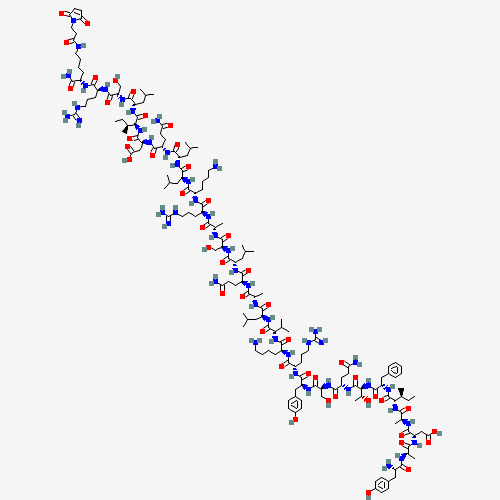
CJC-1295 is a synthetic 30-amino-acid analog of growth hormone-releasing hormone (GHRH), built on the biologically active GHRH(1-29) fragment. It carries amino-acid substitutions that resist enzymatic breakdown (most importantly by dipeptidyl peptidase-4, or DPP-4), and the DAC (“drug affinity complex”) variant adds a maleimidopropionic-acid linker that lets the molecule covalently bind circulating serum albumin once injected. That albumin tether is the whole point: it extends the elimination half-life from GHRH’s few minutes to roughly six to eight days (reported ~5.8-8.1 days), which is why the peptide can be dosed infrequently rather than continuously. CJC-1295 is not approved by the FDA, Health Canada, or any other regulator for human use; it is sold strictly as a research chemical for laboratory and educational purposes.
How CJC Works
Like native GHRH, CJC-1295 binds GHRH receptors on the somatotroph cells of the anterior pituitary and stimulates the synthesis and secretion of the body’s own growth hormone (GH). Elevated GH in turn drives the liver to produce more insulin-like growth factor 1 (IGF-1), the principal downstream mediator of GH’s effects. In healthy adults, a single subcutaneous dose produced dose-dependent 2- to 10-fold increases in mean plasma GH lasting six days or more and 1.5- to 3-fold increases in IGF-1 lasting nine to eleven days, with cumulative effects on repeat dosing.1 Sustained GHRH-receptor stimulation does not flatten GH output into a monotonous infusion. Pulsatile secretion is preserved, with unchanged pulse frequency and amplitude but a markedly elevated basal (trough) level of roughly 7.5-fold, which raises overall mean GH about 46% and IGF-1 about 45%.2 This “physiologic pulsatility on a raised floor” is what distinguishes a GHRH analog from a direct GH injection.
What the Research Shows
- Prolonged GH and IGF-1 elevation. Two randomized, placebo-controlled, double-blind ascending-dose trials in healthy adults found a single subcutaneous dose raised mean plasma GH 2- to 10-fold for 6+ days and IGF-1 1.5- to 3-fold for 9-11 days, with a half-life of ~5.8-8.1 days and cumulative effects on repeat dosing.1
- Pulsatility preserved. In healthy men, continuous GHRH-receptor stimulation kept GH pulse frequency and amplitude intact while raising trough GH ~7.5-fold, lifting mean GH ~46% and IGF-1 ~45%. That maps the mechanism of tonic GH elevation without abolishing natural rhythm.2
- Growth normalization in vivo. In GHRH-knockout mice, once-daily CJC-1295 for five weeks normalized body weight and length and increased total pituitary RNA and GH mRNA, confirming a somatotroph-stimulating action; less frequent dosing (every 48-72 h) was less effective.3
- Downstream biomarkers. Two-dimensional gel electrophoresis of sera from eleven healthy men, before and one week after dosing, showed reproducible serum-proteome changes: decreased apolipoprotein A1 and transthyretin isoforms, increased beta-hemoglobin and albumin/immunoglobulin fragments, with one fragment correlating linearly with IGF-1. That identified candidate markers of GH/IGF-1 action.4
Researchers comparing GH-axis compounds often study CJC-1295 alongside the ghrelin-mimetic secretagogue Ipamorelin, the orally active MK-677 – Ibutamoren, and the GH-fragment AOD9604 to contrast GHRH-receptor stimulation with other routes to GH and IGF-1 modulation.
Chemical Properties
| Research Name | CJC-1295 (DAC) |
| CAS Number | 863288-34-0 |
| Molecular Formula | C152H252N44O42 |
| Molecular Weight | 3367.9 g/mol |
| Classification | Synthetic GHRH analog (DAC); long-acting, albumin-binding |
Research Protocols & Handling
CJC-1295 is supplied as a lyophilized powder for in-vitro and laboratory research only. It is not for human or veterinary consumption. Store the sealed lyophilized peptide cold and protected from light; it is generally stable for extended periods when kept frozen. Reconstitute with bacteriostatic or sterile water for laboratory preparations, swirling gently rather than shaking to avoid shearing the peptide, and keep reconstituted solution refrigerated with use within a limited window. Given the reported ~6-8 day half-life, study designs frequently model infrequent dosing intervals rather than daily administration. Handle with standard laboratory practice, label all preparations clearly as research materials, and keep them out of reach of anyone who might mistake them for a therapeutic product.
Potential Side Effects & Safety
Although the controlled human trials reported no serious adverse reactions and rated CJC-1295 relatively well tolerated at 30-60 microg/kg,1 a range of side effects has been documented or is plausible for the GHRH-analog and GH/IGF-1 drug classes. Anyone assessing this research chemical should weigh the following:
- Injection-site reactions. Pain, redness, swelling, or itching at the administration site, the most commonly reported effect in human trials.
- Facial flushing and warmth. A recognized, transient effect of GHRH analogs shortly after dosing.
- Headache, dizziness, or lightheadedness. Reported in trial settings, usually transient.
- Transient nausea. Short-lived and typically mild.
- Fluid retention and peripheral edema. A GH/IGF-1 class effect from sodium and water retention.
- Arthralgias and muscle pain. Joint aches and myalgia are recognized GH/IGF-1 class effects.
- Paresthesias. Numbness or tingling, including carpal-tunnel-type symptoms, a known GH class effect.
- Impaired glucose tolerance. Sustained GH/IGF-1 elevation can reduce insulin sensitivity, a drug-class-plausible effect with prolonged exposure.
- Altered serum protein profile. Measurable downstream biomarker shifts (e.g., apolipoprotein A1 and transthyretin isoforms) accompany GH/IGF-1 activation.4
- Theoretical proliferative risk. Chronic supraphysiologic GH/IGF-1 exposure could in principle promote growth of GH/IGF-1-sensitive tissues or neoplasms; this is drug-class-plausible and was not established in the short trials.
Not approved for human consumption in Canada or elsewhere; research and educational use only.
Frequently Asked Questions
Is CJC legal in Canada?
CJC-1295 is not an approved drug in Canada and is not authorized by Health Canada for human use. It may be bought and sold as a research chemical for laboratory and educational purposes only, and must not be marketed or used for human consumption. Helixx supplies CJC-1295 Canada-wide strictly on that research-use basis.
How is CJC-1295 different from Ipamorelin?
CJC-1295 is a GHRH analog that stimulates the pituitary through GHRH receptors and raises the baseline GH level over days, while Ipamorelin is a selective ghrelin-receptor secretagogue that triggers sharper, shorter GH pulses. Because they act on complementary pathways, researchers frequently study them as a comparison pair or in combination.
Why does CJC-1295 last so long?
The DAC variant carries a linker that covalently binds circulating serum albumin after injection, protecting the peptide from rapid clearance and extending its half-life from GHRH’s few minutes to roughly 6-8 days.1 That is what allows infrequent dosing in study designs.
Does it flatten out natural GH pulses?
No. Research in healthy men showed that even under sustained GHRH-receptor stimulation, GH secretion stayed pulsatile (pulse frequency and amplitude were unchanged) while the trough level and overall mean GH rose substantially.2
References
Peer-reviewed and authoritative sources cited above. Helixx supplies research materials for laboratory and educational use only; citations are provided for independent verification, not as medical guidance.
- Teichman SL, Neale A, Lawrence B, Gagnon C, Castaigne JP, Frohman LA. Prolonged stimulation of growth hormone (GH) and insulin-like growth factor I secretion by CJC-1295, a long-acting analog of GH-releasing hormone, in healthy adults. J Clin Endocrinol Metab. 2006 Mar;91(3):799-805. PMID: 16352683.
- Ionescu M, Frohman LA. Pulsatile secretion of growth hormone (GH) persists during continuous stimulation by CJC-1295, a long-acting GH-releasing hormone analog. J Clin Endocrinol Metab. 2006 Dec;91(12):4792-7. PMID: 17018654.
- Alba M, Fintini D, Sagazio A, Lawrence B, Castaigne JP, Frohman LA, Salvatori R. Once-daily administration of CJC-1295, a long-acting growth hormone-releasing hormone (GHRH) analog, normalizes growth in the GHRH knockout mouse. Am J Physiol Endocrinol Metab. 2006 Dec;291(6):E1290-4. PMID: 16822960.
- Sackmann-Sala L, Ding J, Frohman LA, Kopchick JJ. Activation of the GH/IGF-1 axis by CJC-1295, a long-acting GHRH analog, results in serum protein profile changes in normal adult subjects. Growth Horm IGF Res. 2009 Dec;19(6):471-7. PMID: 19386527.