Complete your stack
- YK11 - Myostine Original price was: $109.99.$84.99Current price is: $84.99.
- SR9009 - Stenabolic Original price was: $99.99.$79.99Current price is: $79.99.
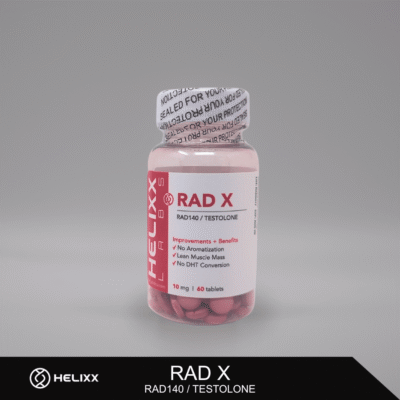
- RAD 140 – Testolone Original price was: $109.99.$84.99Current price is: $84.99.
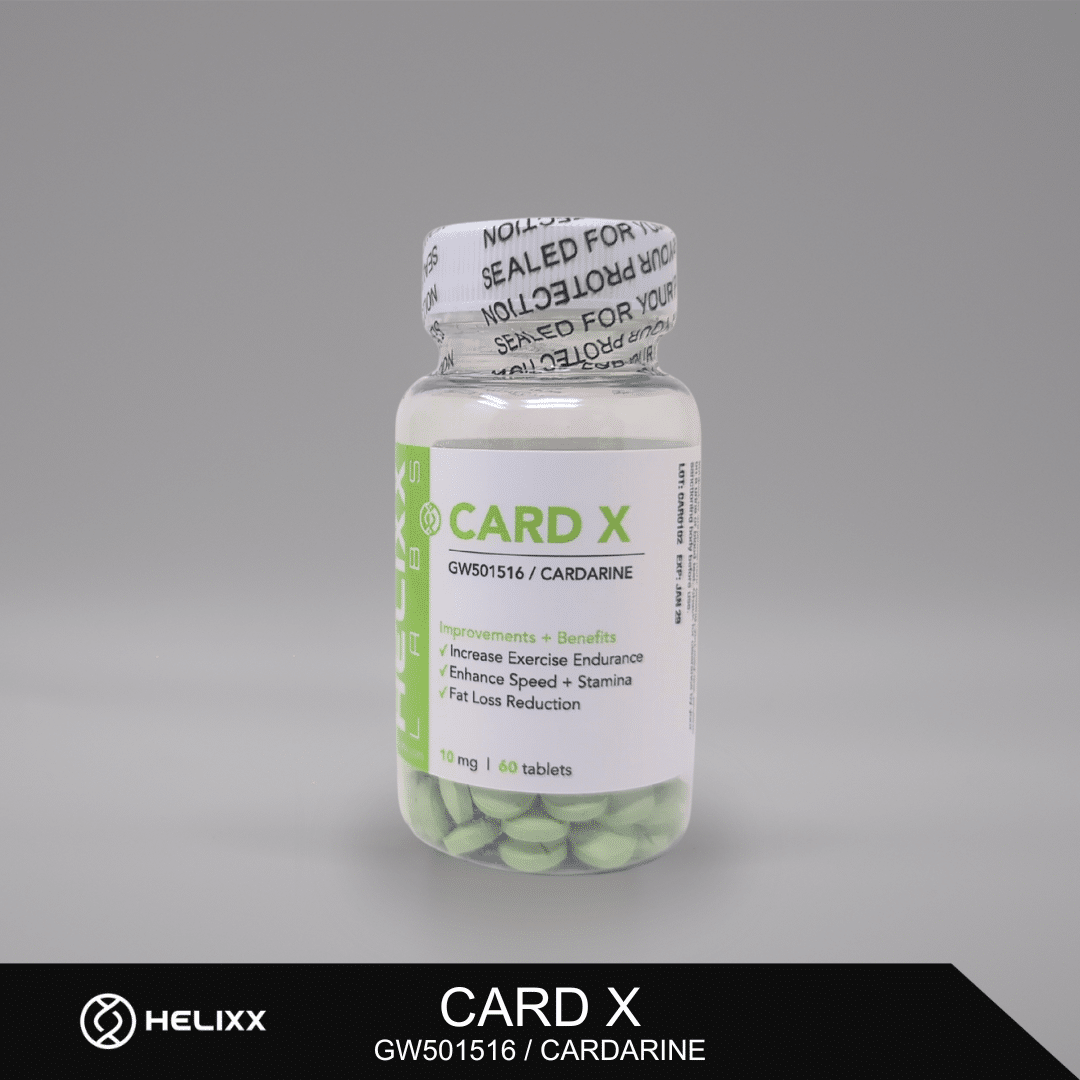
Cardarine – GW-501516
Original price was: $109.99.$84.99Current price is: $84.99.
Cardarine (GW-501516) is the reference-standard PPARδ agonist prized in metabolic and endurance research, high-purity Cardarine – GW-501516 Canada material, third-party quality, for laboratory and educational use only.
Description
Cardarine (GW-501516) is one of the most studied metabolic research compounds in the world, and Helixx supplies it as a high-purity reference standard for Canadian laboratories and independent researchers. The literature prizes it for reprogramming how muscle cells burn fuel, pushing them toward fat oxidation and endurance-style energy metabolism, which keeps GW-501516 a cornerstone tool for investigating the PPARδ pathway, lipid handling and exercise-mimetic biology.1 When you need dependable Cardarine – GW-501516 Canada material with the honesty its complex safety profile demands, this is research-grade product intended strictly for laboratory and educational use, never for human consumption.
What Is Cardarine – GW-501516?
Cardarine, known by its development code GW-501516, is a potent and highly selective agonist of peroxisome proliferator-activated receptor delta (PPARδ, also written PPARβ/δ). It gets grouped with research chemicals in the broader Canadian SARMs conversation, but the distinction matters: Cardarine is not a SARM. It has no androgenic or hormonal activity whatsoever. Instead, it works entirely through PPARδ, a nuclear receptor that acts as a master switch for lipid metabolism and energy expenditure. GlaxoSmithKline originally developed GW-501516 as a candidate treatment for dyslipidemia and metabolic disease, but discontinued the programme in the 2000s after long-term rodent studies revealed serious safety concerns (detailed below). It was never approved for human use and is banned in sport by the World Anti-Doping Agency. Today it circulates almost exclusively as a laboratory research chemical, frequently discussed alongside true SARMs in the SARMs Canada market even though its mechanism is fundamentally different.
How Cardarine Works
When GW-501516 binds PPARδ, the receptor pairs with the retinoid X receptor (RXR) and acts as a nuclear transcription factor, switching on a coordinated programme of genes that govern how cells acquire and burn fuel. In skeletal muscle, this drives fatty-acid uptake, mitochondrial and peroxisomal β-oxidation, cholesterol efflux and mitochondrial energy uncoupling, collectively shifting the cell’s fuel preference away from glucose and toward fat.1 Over time this reprogramming favours oxidative, slow-twitch muscle fibre characteristics. The most cited consequence emerged from work at the Salk Institute, where combining GW-501516 with exercise training (or with the AMPK activator AICAR) markedly raised running endurance in mice, establishing the AMPK–PPARδ axis as an “exercise-mimetic” pathway.2 The same activated PPARδ signalling promotes reverse cholesterol transport, which underlies Cardarine’s characteristic effects on blood lipids. The catch is that the very proliferative and metabolic signalling that benefits muscle is also implicated in accelerated tumour growth in vulnerable tissue. That oncologic liability is baked into the pharmacology and cannot be separated from its metabolic action.
What the Research Shows
- Core metabolic mechanism. In skeletal muscle cells, GW-501516 activation of PPARβ/δ induced genes driving preferential lipid utilization, fatty-acid β-oxidation, cholesterol efflux and mitochondrial energy uncoupling.1
- Exercise-mimetic endurance. GW-501516 combined with exercise training (or with AICAR) increased running endurance in mice by roughly 60–75%, defining the AMPK–PPARδ pathway as an exercise mimetic.2
- First human lipid data. Two weeks of oral GW-501516 (2.5 or 10 mg/day) in sedentary healthy volunteers significantly raised HDL-C and lowered triglycerides versus placebo.3
- Largest controlled human trial. A 12-week randomized study (n=268) in low-HDL/metabolic-syndrome patients found GW-501516 raised HDL-C by up to ~16.9% and apoA-I by ~6.6%, while lowering LDL-C, triglycerides, apoB and free fatty acids.4
- Tumour-promotion signal. In carcinogen-exposed mice, selective PPARδ activation by GW-501516 rapidly induced highly metastatic squamous-cell forestomach carcinomas within two months, the mechanistic evidence behind GSK’s discontinuation.5
Because it sits at the metabolic and endurance end of the research-chemical spectrum, Cardarine is frequently compared with SR9009 – Stenabolic and studied alongside true androgen-receptor SARMs such as MK2866 – Ostarine, LGD-4033 – Ligandrol and RAD 140 – Testolone in comparative pathway research.
Chemical Properties
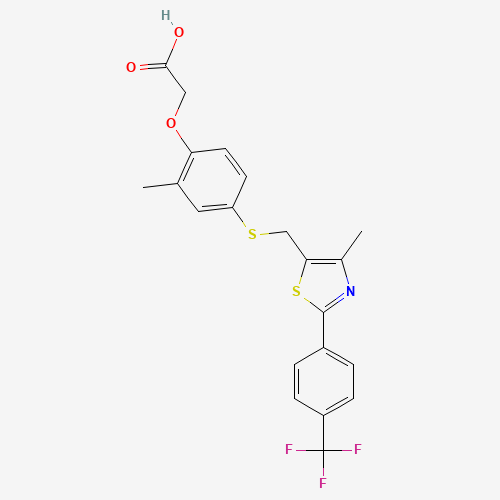
| Research Name | Cardarine (GW-501516) |
| CAS Number | 317318-70-0 |
| Molecular Formula | C21H18F3NO3S2 |
| Molecular Weight | 453.50 g/mol |
| Classification | Selective PPARδ (PPARβ/δ) agonist, not a SARM; no hormonal activity |
Research Protocols & Handling
This material is supplied for in-vitro laboratory research and educational purposes only. It is not for human or veterinary use, not a dietary supplement, and not intended to diagnose, treat, cure or prevent any condition. GW-501516 is a small molecule with limited aqueous solubility and is typically handled in solvent stocks (for example DMSO or ethanol) for in-vitro work; researchers should prepare and dilute stock solutions according to their own validated protocols. Store the material sealed and protected from light, heat and moisture. Cool, dry conditions preserve stability, and reconstituted stocks are best kept refrigerated or frozen in aliquots to avoid repeated freeze–thaw cycles. Handle with appropriate personal protective equipment and dispose of in accordance with institutional guidelines. As with any unregulated research chemical, verify identity and purity with your own analytics before use.
Potential Side Effects & Safety
Cardarine’s safety profile is the single most important thing to understand about it, and Helixx will not soften it. GSK abandoned this compound for a reason, and the risks below are documented in the scientific record:
- Carcinogenicity. Two-year rat and mouse studies showed dose- and time-dependent tumour formation across multiple organs (including liver, stomach, thyroid, bladder and skin) at 10–100 mg/kg/day. This is the finding that led GSK to halt development.
- Tumour promotion and acceleration. PPARδ activation by GW-501516 promoted rapid, metastatic gastric/forestomach cancer in carcinogen-exposed mice.5
- No established human safety profile. It was never approved for medical use. Only short-term human data (roughly 2–12 weeks) exist, so long-term risks in humans are simply unknown.4
- Gastrointestinal toxicity in animals. Rectal bleeding was reported in mice at around 10 mg/kg/day.
- Potential hepatotoxicity. Liver injury has been flagged as a concern for this drug class and in unregulated bodybuilding use, though no formal LiverTox monograph establishes a defined risk.
- Prohibited substance. GW-501516 is banned at all times by the World Anti-Doping Agency, which took the rare step of issuing a public safety alert to athletes specifically over the cancer risk.
- Metabolic and lipid changes. Its intended pharmacology alters HDL, LDL, triglycerides and free fatty acids, a therapeutic aim in dyslipidemia research but an off-target effect in any other context.
- Research-chemical quality risks. Products sold for laboratory use are not pharmaceutical-grade and may vary in purity, dose and contamination.
Not approved for human consumption in Canada or elsewhere; research and educational use only.
Frequently Asked Questions
Is Cardarine legal in Canada?
Cardarine (GW-501516) is not an approved drug or licensed health product in Canada and carries no Health Canada authorization for human use. It can be sold and purchased as a research chemical for laboratory and educational purposes only, but it is not legal to market or use for human consumption. It is also banned at all times in sport by WADA.
Is Cardarine a SARM?
No. Although it is commonly discussed within the Canadian SARMs market, Cardarine is a selective PPARδ agonist with no androgenic or hormonal activity. It works through a nuclear receptor that controls lipid metabolism and energy expenditure, which is a completely different mechanism from true androgen-receptor SARMs like LGD-4033 – Ligandrol.
Why did GSK stop developing GW-501516?
GlaxoSmithKline discontinued the compound after long-term (two-year) rodent carcinogenicity studies showed dose-dependent tumours across numerous organs. Supporting mechanistic work also showed PPARδ activation accelerating metastatic cancer in carcinogen-exposed mice.5 It was never approved for human use.
What is Cardarine researched for?
In the scientific literature it is studied as a model PPARδ agonist for fatty-acid oxidation, endurance and exercise-mimetic biology,2 and for its effects on blood lipids such as HDL-C and triglycerides.4 Because of its metabolic focus it is often compared with SR9009 – Stenabolic in pathway research.
References
Peer-reviewed and authoritative sources cited above. Helixx supplies research materials for laboratory and educational use only; citations are provided for independent verification, not as medical guidance.
- Dressel U, et al. The peroxisome proliferator-activated receptor beta/delta agonist, GW501516, regulates the expression of genes involved in lipid catabolism and energy uncoupling in skeletal muscle cells. Mol Endocrinol. 2003;17(12):2477-2493. PMID: 14525954.
- Narkar VA, Downes M, Yu RT, et al. AMPK and PPARdelta agonists are exercise mimetics. Cell. 2008;134(3):405-415. PMID: 18674809.
- Sprecher DL, et al. Triglyceride:high-density lipoprotein cholesterol effects in healthy subjects administered a peroxisome proliferator activated receptor delta agonist. Arterioscler Thromb Vasc Biol. 2007;27(2):359-365. PMID: 17110604.
- Olson EJ, et al. Lipid effects of peroxisome proliferator-activated receptor-δ agonist GW501516 in subjects with low high-density lipoprotein cholesterol: characteristics of metabolic syndrome. Arterioscler Thromb Vasc Biol. 2012;32(9):2289-2294. PMID: 22814748.
- Pollock CB, Rodriguez O, Martin PL, et al. Induction of Metastatic Gastric Cancer by Peroxisome Proliferator-Activated Receptor δ Activation. PPAR Res. 2010;2010:571783. PMID: 21318167.
Complete Your Stack
Frequently bought together, add all and save.