Complete your stack
- Cardarine - GW-501516 Original price was: $109.99.$84.99Current price is: $84.99.
- SR9009 - Stenabolic Original price was: $99.99.$79.99Current price is: $79.99.
- YK11 - Myostine Original price was: $109.99.$84.99Current price is: $84.99.
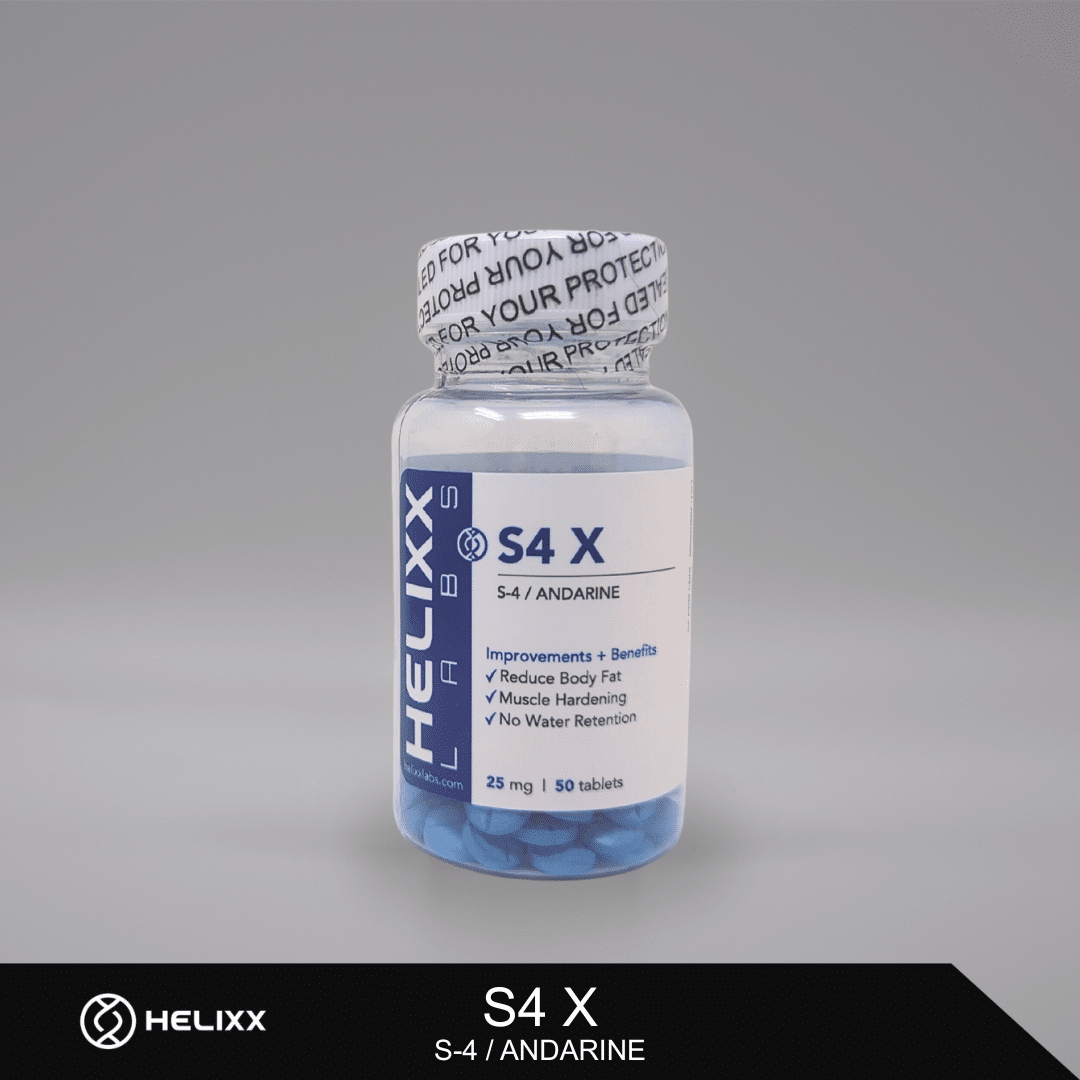
Andarine – S4 S-40503
Original price was: $99.99.$79.99Current price is: $79.99.
Andarine (S4 / S-40503) is one of the most researched non-steroidal SARMs available in Canada, a tissue-selective compound prized in the lab for its muscle- and bone-anabolic profile. Premium-purity Andarine – S4 S-40503 Canada stock, for laboratory and research use only.
Description
When your protocol calls for a benchmark non-steroidal SARM, Andarine – S4 S-40503 is the reference compound researchers keep coming back to. As one of the original arylpropionamide selective androgen receptor modulators, S4 pairs full agonist activity in muscle and bone with markedly weaker stimulation of androgenic tissue. That tissue-selective signature made it a cornerstone of early SARM pharmacology.1 Helixx supplies premium-purity Andarine – S4 S-40503 Canada stock to Canadian labs and independent researchers, backed by clear documentation and honest science, for laboratory and educational use only.
What Is Andarine – S4 S-40503?
Andarine (also known as S-4, GTx-007, or S-40503) is a non-steroidal, orally bioavailable selective androgen receptor modulator (SARM) originally developed by GTx, Inc. Chemically it belongs to the arylpropionamide class, the same family that later produced enobosarm/ostarine (S-22). It was explored preclinically as a candidate for muscle wasting, osteoporosis and benign prostatic hyperplasia, but it never advanced into full human clinical development, largely because of a dose-dependent visual side effect (discussed below). Today it exists only as an unregulated research chemical. Among Canadian SARMs, Andarine remains a widely studied reference compound, and Helixx stocks Andarine – S4 S-40503 Canada material strictly for in-vitro and laboratory research, never for human consumption.
How Andarine Works
Andarine acts as a ligand that binds directly to the androgen receptor (AR). Its AR binding affinity sits roughly an order of magnitude below dihydrotestosterone (DHT), with a Ki in the low-to-tens-of-nanomolar range, yet better pharmacokinetics give it strong activity in living systems. Its defining feature is tissue selectivity: in the foundational characterization of arylpropionamide SARMs in castrated rats, S-4 stimulated the anabolic levator ani muscle as much as or more than testosterone propionate, while behaving as only a weak or partial agonist in androgenic organs such as the prostate and seminal vesicle.1 The practical result modelled in animals is muscle- and bone-anabolic signalling with substantially reduced prostate stimulation, the mechanistic basis for its exploration in muscle- and bone-loss research. Andarine is not an approved drug in any jurisdiction and is prohibited in sport by WADA.
What the Research Shows
- Tissue-selective mechanism. In castrated rats, S-4 and related arylpropionamides drove the anabolic levator ani muscle as strongly as testosterone propionate while sparing androgenic organs, establishing andarine’s tissue-selective profile.1
- Muscle & bone in male models. In orchidectomized (castrated) male rats, S-4 restored skeletal muscle mass and strength and preserved bone density with minimal effect on the prostate, a tissue-selective anabolic benefit relevant to muscle wasting and hypogonadism.2
- Bone density & body fat in female models. In ovariectomized rats, S-4 maintained whole-body and trabecular bone mineral density, cortical content and bone strength while reducing body fat, supporting its investigation in osteoporosis and bone-loss models.3
- Ongoing exploratory research. More recent preclinical work has examined S-4 as a candidate in glioblastoma multiforme, an example of continued, non-approved laboratory investigation into the compound beyond its original endocrine applications.5
Researchers frequently study Andarine alongside other SARMs Canada compounds such as MK2866 – Ostarine, RAD 140 – Testolone and LGD-4033 – Ligandrol, and next to the myostatin-focused YK11 – Myostine for comparative receptor and body-composition work.
Chemical Properties
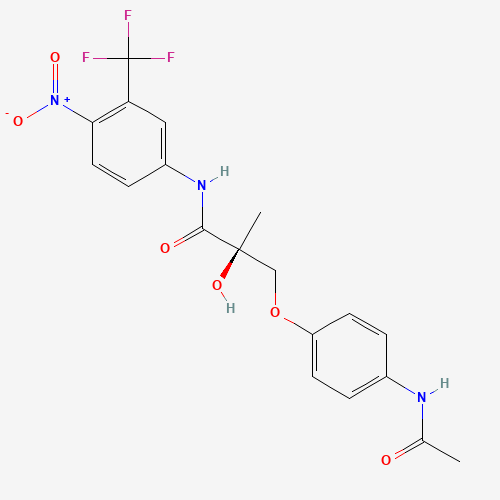
| Research Name | Andarine – S4 S-40503 (S-4, GTx-007) |
| CAS Number | 401900-40-1 |
| Molecular Formula | C19H18F3N3O6 |
| Molecular Weight | 441.36 g/mol |
| Classification | Non-steroidal arylpropionamide selective androgen receptor modulator (SARM) |
Research Protocols & Handling
Andarine – S4 S-40503 is supplied exclusively for laboratory, research and educational use; it is not for human consumption and not for veterinary use. Handle it as you would any research chemical: work in an appropriate laboratory setting, wear suitable protective equipment, and avoid ingestion, inhalation or skin contact. As a non-steroidal small molecule, andarine is typically stored as a solid or in solution away from light, heat and moisture; keep sealed containers in a cool, dry place (refrigeration or freezing extends shelf life), and if reconstituted in a suitable solvent, aliquot to minimise repeated freeze-thaw cycles. Always confirm identity and purity against the accompanying documentation (PubChem CID 9824562) before beginning any experiment.
Potential Side Effects & Safety
Honest science matters. Andarine is an investigational compound with a documented risk profile observed in animal studies, anecdotal reports and the wider SARM literature. It is not approved by Health Canada, the FDA or any regulator, and the effects below are among the reasons it never reached human clinical use.
- Visual disturbance (xanthopsia). The hallmark documented effect of andarine is a dose-dependent visual disturbance: yellow-tinted vision, impaired night vision, and difficulty adapting between light and dark. It is more pronounced at higher doses and reported to be reversible on discontinuation, and it is the effect that halted andarine’s clinical development.
- Hormonal (HPG axis) suppression. Like SARMs as a class, andarine can suppress the hypothalamic-pituitary-gonadal axis, lowering endogenous testosterone, LH and FSH through androgen-receptor-mediated feedback.
- Adverse lipid changes. SARM exposure is associated with unfavourable blood-lipid shifts, notably a decrease in HDL (“good”) cholesterol.
- Potential hepatotoxicity. Elevated liver enzymes (transaminases) and possible liver stress have been reported with SARMs as a drug class.
- Product quality & contamination. Because andarine is sold only as an unregulated research chemical, product quality varies widely: an analysed black-market product was found to contain S-4 at roughly 150 mg/mL together with about 10% impurity from poor purification, underscoring the quality-control and anti-doping concerns around illicit material.4
- Androgenic-class effects. Theoretical anabolic/androgenic effects of misuse (mood changes, acne, and effects on reproductive tissues in animal research) remain possible, though andarine is comparatively prostate-sparing relative to testosterone.
Not approved for human consumption in Canada or elsewhere; research and educational use only.
Frequently Asked Questions
Is Andarine legal in Canada?
Andarine is not an approved drug in Canada and is not authorized by Health Canada for human consumption. It is sold and purchased strictly as a research chemical for laboratory and educational use. It is also prohibited in sport by WADA. Helixx supplies Andarine – S4 S-40503 Canada material on that basis only, never for personal use.
What makes Andarine different from other SARMs?
Andarine is one of the earliest arylpropionamide SARMs and is defined by its tissue selectivity: full agonist activity in muscle and bone with weaker action in androgenic tissue.1 It is best known for a documented dose-dependent visual side effect, which distinguishes it from newer compounds like MK2866 – Ostarine.
What has Andarine been studied for?
How should Andarine be stored and handled?
Store it sealed, away from light, heat and moisture, ideally refrigerated or frozen, and handle it with appropriate laboratory protective equipment. Verify purity against the supplied documentation before use, and treat it as strictly non-consumable research material.
References
Peer-reviewed and authoritative sources cited above. Helixx supplies research materials for laboratory and educational use only; citations are provided for independent verification, not as medical guidance.
- Yin D, Gao W, Kearbey JD, et al. Pharmacodynamics of selective androgen receptor modulators. J Pharmacol Exp Ther. 2003;304(3):1334-1340. PMID: 12604714.
- Gao W, Reiser PJ, Coss CC, Phelps MA, Kearbey JD, Miller DD, Dalton JT. Selective androgen receptor modulator treatment improves muscle strength and body composition and prevents bone loss in orchidectomized rats. Endocrinology. 2005;146(11):4887-4897. PMID: 16099859.
- Kearbey JD, Gao W, Narayanan R, et al. Selective androgen receptor modulator (SARM) treatment prevents bone loss and reduces body fat in ovariectomized rats. Pharm Res. 2007;24(2):328-335. PMID: 17063395.
- Thevis M, Geyer H, Kamber M, Schanzer W. Detection of the arylpropionamide-derived selective androgen receptor modulator (SARM) S-4 (andarine) in a black-market product. Drug Test Anal. 2009;1(8):387-392. PMID: 20355219.
- Exploring the potentials of S4, a selective androgen receptor modulator, in glioblastoma multiforme therapy. PubMed. 2024. PMID: 38997069.
Complete Your Stack
Frequently bought together, add all and save.